The Best Automotive CRM is the One That Gets Used
Automotive CRM
DriveCentric
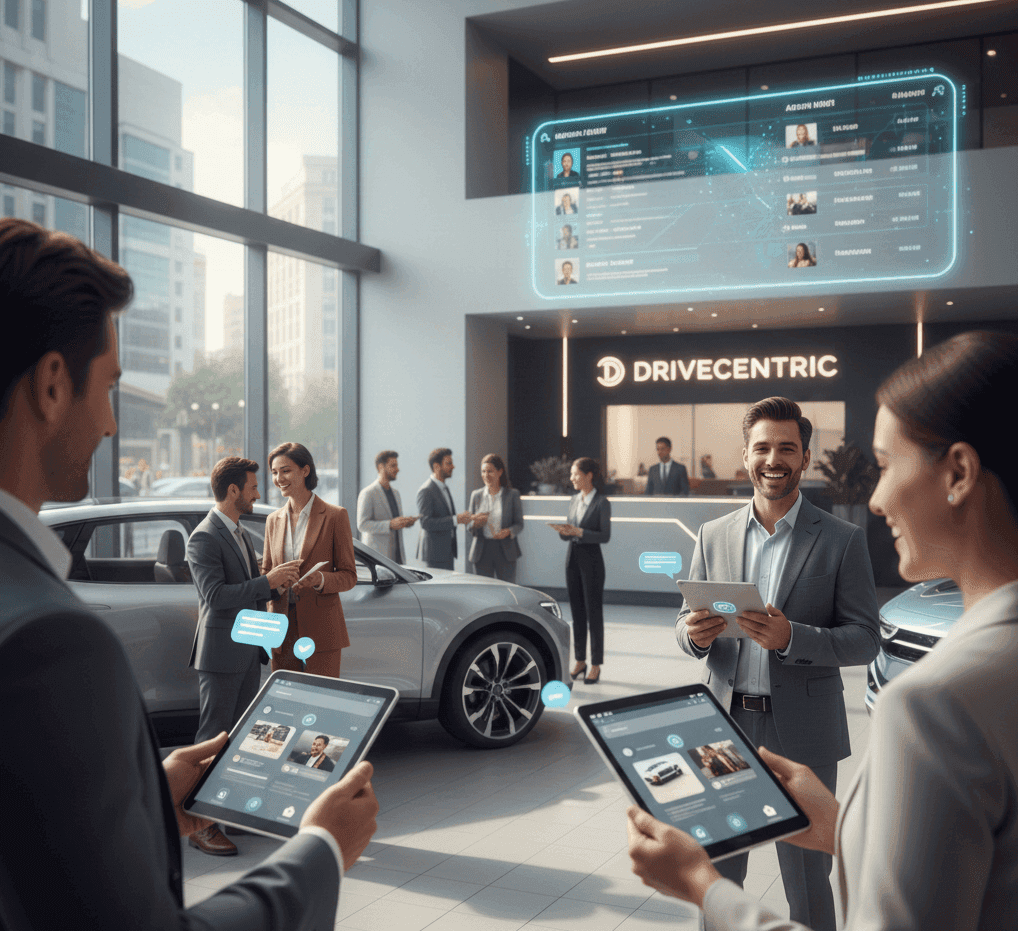
Most dealerships have a CRM, but you and your team probably feel what the rest of the industry feels: these systems still get used far less than they should. According to CSO Insights, fewer than 40% of CRM-using organizations report end-user adoption above 90%.
CRM adoption has been a longstanding challenge in retail automotive. Dealers know the pain firsthand. You can invest in a powerful, feature-packed platform, but if your team isn’t logging in, entering notes, or working the process consistently, the technology can’t deliver the results you paid for. It becomes one more tool that looks great on paper but never makes a real impact on the sales floor.
But the issue isn’t a lack of effort or commitment from your team. It’s that traditional CRMs weren’t built around the way dealership sales actually happen. As the industry moves toward more AI-driven, real-time, customer-first experiences, the next generation of CRM needs to work the way your people work—not the other way around.
Legacy CRMs Fail to Drive Adoption
In retail automotive, your team is juggling walk-ins, appointments, and follow-ups all day long. When a CRM doesn’t get used, it’s not just frustrating–it’s wasted money. As Steve Roessler, Chief Evangelist at DriveCentric, likes to say: “If your dealership CRM were simple to use, your salespeople would be using it. All the time.” The friction often comes from the tool itself, not a lack of effort.
Many legacy CRM platforms were built for a different era. They started as desktop databases designed to store customer information, not tools to support real-time conversations or fast-moving sales teams. Dealership communication centered on slower, one-to-one channels, and software design reflected that.
But your world looks different now. Customers expect quick responses over text. Your team lives on mobile. Social, video, and conversational messaging play just as big a role as traditional phone calls. Legacy CRMs have tried to keep up by tacking on features over the years, but many have become layered with incremental add-ons that never fully fit together.
When a CRM introduces friction–too many clicks, outdated workflows, or tools that don’t match how your team communicates–it’s only natural for salespeople to work around it. If a system disrupts their momentum instead of supporting it, it’s going to be ignored.
High CRM Usage Matters More Than Features
Industry research shows that organizations with strong CRM adoption see better sales performance, higher customer retention, and stronger ROI. But that only happens when activity becomes part of a reliable, repeatable rhythm.
The flip side is just as common across automotive retail: when a CRM sits untouched, it delivers zero value. Many CRM projects fail to meet expectations, and companies across industries have wasted billions on systems that never gained traction. Dealers repeat a consistent theme–clarity and ease typically outperform complex feature sets. Tools that feel natural consistently drive better day-to-day usage.
Once usage becomes a habit, the benefits compound. When your team logs activity regularly, your data gets cleaner, your forecasts get clearer, and your customer conversations become more timely and personal. Top-performing sales organizations are far more likely to use their CRM consistently, and that consistency is what separates good stores from high-growth ones.
Your customers feel the difference, too. Dealerships that fully leverage their CRM often see stronger retention, thanks to faster follow-ups and more relevant outreach. And by automating tedious tasks like reminders and data entry, a well-used CRM frees up capacity for the interactions that actually close deals. Dealers repeatedly point to usability as the deciding factor when choosing a platform.
Building CRM Systems That Salespeople Actually Use
Usage tends to rise when the system blends into everyday habits. But if basic tasks take too many clicks or the interface feels clunky, adoption drops fast. The benchmark today comes from the consumer apps your team uses every day–texting, Instagram, FaceTime–where the learning curve is virtually invisible. When CRM actions like sending a message, logging a note, or updating a deal feel just as natural, usage follows.
Modern CRM expectations are also shaped by how customers prefer to communicate. Most buyers now lean toward texting and video rather than long phone calls or email threads. Studies show that 40% of customers prefer texting with dealerships. Additionally, personalized videos deliver a 70-80% increase of in-store appointments. Some dealers even report significant lifts in gross profit when video becomes part of the sales process. As the industry leans into more visual, conversational communication, the CRM needs to treat these channels as built-in expectations–not afterthoughts.
Mobile access has become equally important. Sales activity happens everywhere–on the lot, in the service lane, and while walking customers through inventory. A mobile-first CRM lets your team send follow-ups, capture notes, or record video from anywhere. The impact is real: teams that embrace a mobile CRM see higher productivity and more reps hitting quota. Yet many legacy systems still treat mobile as secondary, making it harder for your people to work the way they naturally do.
Ultimately, the right CRM becomes part of the conversation itself, not a separate task. It supports real-time communication, reduces manual work, and makes every interaction more personal. When the system helps your team sell more–not just record what they did–adoption stops being a mandate. It becomes instinct.
DriveCentric’s Differentiator: Engagement by Design
The shift toward simpler, more conversational tools is already underway. DriveCentric is one of the platforms helping lead that change.
Instead of piling on features, DriveCentric was built around a straightforward idea: effectiveness ultimately hinges on everyday engagement. Working with thousands of dealerships across North America–DriveCentric addresses the engagement challenges that have traditionally limited performance for many dealerships.
Its approach reflects where the industry is heading. Texting, chat, social-style activity feeds, and video messaging aren’t add-ons–they’re baked into the core experience. Everything a salesperson needs lives on a single, clean screen, and every interaction updates the record automatically. When someone sends a text, records a quick walkaround video, or replies to a customer, they’re capturing valuable data in the background while keeping the conversation moving.
That integration eliminates the extra steps that normally disrupt a salesperson’s flow. Instead, the system becomes part of the cadence of the customer interaction.
DriveCentric’s mobile experience reinforces that direction. Its app mirrors the desktop layout, so salespeople can follow up with leads, send videos, and update deals right from their phones. The result is striking–dealerships on the platform see a 91% mobile usage rate, something rarely seen in CRM adoption benchmarks. It demonstrates how seamless mobile access can reshape usage patterns.
Dealers who embrace this style of CRM often report stronger engagement, faster responses, and better customer experiences. Many see improvements in lead-to-showroom conversions and CSI because communication becomes more immediate and personal. The takeaway for dealers is increasingly clear: when a CRM supports the way your team already sells–fast, mobile, and conversational–adoption rises, and the business benefits follow.
Conclusion: Choose a CRM Your Team Will Actually Use
Every CRM claims to be the “best,” but dealers know better than anyone: success hinges on the behaviors your CRM encourages–not the number of features it offers.
The most valuable CRM is the one your sales and BDC teams rely on to manage conversations, follow-ups, and deals–without feeling like they’re fighting the system. It should mesh with the pace and pattern of your team’s day, whether they’re at a desk, on the lot, or responding from their phone.
When you’re evaluating CRM options, a few questions matter more than anything else:
Will my team want to use this tool?
Does it make everyday tasks faster, not harder?
Does it support modern communication–text, video, instant messaging?
And can my team access it easily, anywhere?
Those answers usually predict the outcome. A CRM that aligns with how your people work becomes a growth engine. Systems that fail to earn daily usage quickly fade into the background.
If you’re ready to explore what a higher-adoption, customer-first CRM strategy looks like, now is the time to take a closer look at DriveCentric.