How AI Is Transforming the Modern Car Dealership
Artificial Intelligence
DriveCentric
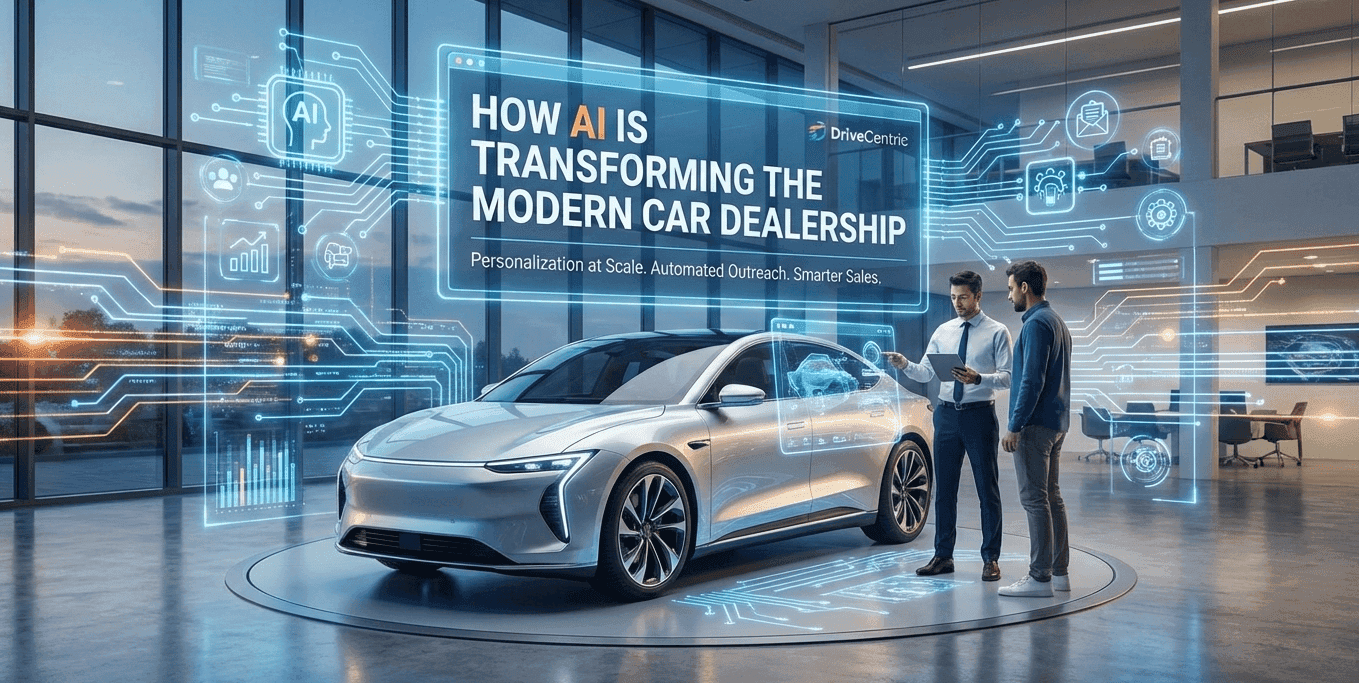
AI is no longer a futuristic concept reserved for tech giants. It’s becoming a practical, everyday advantage for dealerships–helping your team streamline workflows, personalize every customer interaction, and stay ahead of shifting market demands.
From sales to service to inventory, AI is accelerating work you’re already doing while unlocking entirely new ways to connect with customers. These trends point clearly to where the industry is heading–and why forward-looking dealers are leaning into AI now.
Let’s take a closer look at the future of AI in dealerships, how leading stores are using it today, and how modern platforms like DriveCentric fit into the broader movement.
AI in Dealership Sales
AI is redefining what "fast follow-up" really means. Your customers expect immediate, personal responses–even when your team is busy or the showroom is closed. AI-powered CRMs help you deliver exactly that.
Instead of juggling dozens of tasks at once, your sales team can lean on AI to automate follow-up, personalize messages, and identify the buyers who are most ready to engage. You get more conversations started–and more deals across the finish line.
Here's how modern AI-powered CRMs are helping dealerships put these capabilities into practice today.
AI-Driven Dealer CRM Platforms
Modern CRMs with built-in AI–like DriveCentric’s Augmented Intelligence CRM–act as virtual team members that never sleep. They respond to inquiries 24/7 with natural, conversational messages, schedule appointments, and follow up with unsold leads or past customers automatically. DriveCentric’s platform uses a blend of conversational AI chat, automated emails and texts, and marketing automation to engage more customers with less friction than older systems. It’s like having an always-on sales assistant built into your CRM.
One Mercedes-Benz dealership manager said adopting the right AI-driven CRM led to “astounding results,” even earning a top national sales award. Another dealer called DriveCentric “the industry’s most modern and advanced” after seeing his team monitor and reply to customer conversations in real time across channels. These stories highlight a simple truth: AI-driven sales tools turn responsiveness into a real-world competitive advantage.
Virtual Sales Assistants & Chatbots
Your team is also likely seeing (or soon will see) AI assistants that hold two-way conversations with customers over email or text. These AI agents engage new leads, answer questions, and prompt next steps like booking a test drive–all in a natural, human-like tone. They make sure every inquiry gets a fast, personal response, even when the showroom is closed. That kind of availability builds trust and keeps shoppers from wandering to competitors.
Virtual sales assistants can also re-engage cold leads, confirm appointments, and hand off hot prospects to human reps at just the right moment. It's like adding headcount without adding payroll. Dealerships using these assistants report higher contact rates and more showroom traffic because the technology never forgets to follow up. That's persistence that pays.
Personalized Marketing at Scale
AI now allows your dealership to personalize marketing at a level that was once impossible. Instead of blasting the same message to everyone, you can analyze each customer's behavior and send relevant offers–like a lease-end reminder or SUV promotion timed perfectly to their interests. It feels personal because it is.
AI messaging platforms like DriveCentric's AIM can instantly segment your CRM database and send customized messages that read as if written by a salesperson. These campaigns run quietly in the background, reaching past buyers, service clients, or inactive leads with fresh, timely outreach. The system works nonstop, keeping your dealership top of mind without tying up staff time.
Dealers using this approach–always-on and data-driven–report more responses, more appointments, and more sales from the leads they already have. It's personalization that scales.
AI in Dealership Service Departments
In fixed operations, AI is becoming a strategic imperative for boosting efficiency and customer satisfaction. Service departments are beginning to use AI to automate appointment handling, make maintenance more transparent, and even predict vehicle needs before problems arise.
Here's where the technology is making the biggest impact–and where it's headed next.
Automated Scheduling & Communication
AI-powered schedulers and virtual assistants are changing how your service department communicates. They help you capture more appointments and answer customer inquiries in real time. For example, phone-based AI can handle service calls, book appointments or recall visits, and respond to common questions without making customers wait for a human advisor. These tools are among the most impactful AI applications available today because they let your customers schedule service 24/7 and get instant answers about their vehicle or account.
The payoff is clear: more booked appointments, shorter hold times, and a smoother customer experience. Your team also finds that automation eases the load on service advisors, helps prevent burnout, and frees staff to focus on face-to-face care.
Predictive Maintenance & Diagnostics
Here's where the industry is heading: AI that turns reactive car repairs into proactive maintenance. Modern vehicles generate constant data–from engine performance to brake wear–and emerging AI platforms are being designed to analyze that data and spot problems early. By comparing live readings to historical patterns, these systems can predict when a part might fail or when service is due, allowing you to reach out to customers before breakdowns occur. It's a smarter, more trustworthy service model.
The same predictive technology can help with parts inventory. By forecasting which parts will be needed based on upcoming appointments and common issues, AI can help ensure you have the right items in stock. That means less waiting and faster repairs for your customers. Service managers testing these tools report higher first-time fix rates and shorter repair cycles because technicians have what they need in advance.
Full integration of predictive maintenance is still evolving across the industry, but the direction is clear: dealerships are moving from "fix it when it breaks" to "prevent it before it happens."
AI-Enhanced Inspections and Transparency
AI is making inspections faster and more transparent. Systems like UVeye use cameras and algorithms to scan vehicles in seconds, checking tires, undercarriages, and body panels for issues. They can spot oil leaks, worn treads, or scratches that a manual inspection might miss. The findings are shared instantly with customers through photos or 3D visuals. When your customers can see what the technician sees, they're more likely to approve repairs. Seeing is believing.
Dealerships using digital inspection tools report faster check-ins, higher upsell acceptance, and stronger trust. A full health scan takes moments, not minutes. AI-driven inspections also improve service bay throughput and customer retention. Every visit feels efficient, transparent, and tailored to the car's actual condition.
AI in Dealer Inventory Management
Managing vehicle inventory is a balancing act–and AI is helping dealers master it. Advanced tools now analyze vast amounts of market data and dealership sales history to make smarter stocking and pricing decisions.
Here's where AI is being deployed across inventory management solutions.
Demand Forecasting & Stock Optimization
AI systems can forecast local market demand with remarkable accuracy. They look at seasonal trends, customer preferences, and even online search data to reveal what's coming next. By "reading" both your internal sales data and external market signals, AI helps you order the right mix of vehicles–down to make, model, trim, and color. This predictive intelligence keeps your lot lean and full of what customers actually want.
For instance, if data shows that trucks with specific packages are trending in your region, AI alerts inventory managers right away. Dealers using these tools maintain sharper, faster-turning inventories and avoid costly aging stock. It's a proactive way to stay aligned with market demand instead of reacting after the fact. The result: fewer slow movers, faster turns, and stronger margins.
Dynamic Pricing and Appraisal
AI is also bringing new precision to vehicle pricing and appraisal. Specialized platforms use live market data–millions of listings and transactions–to recommend the right price for each vehicle. These algorithms monitor market supply, consumer demand, and local competitor pricing in real time. You can adjust pricing dynamically, keeping vehicles competitive without sacrificing profit.
Appraisals benefit from the same technology. AI-driven tools instantly analyze vehicle history, condition, and market demand to generate a fair trade-in offer. That means no guesswork, less bias, and more consistent deals. Dealers say the process is faster, smoother, and more transparent for customers. It also improves inventory turn rates because every car is priced to market from day one.
One standout example is Vehicle Intelligence 360, an AI merchandising tool that scans your inventory and automatically creates interactive vehicle detail pages. It highlights each car's value points–like service history or Kelley Blue Book data–so online shoppers see exactly why it's priced the way it is. The result is better merchandising with zero manual effort and higher buyer confidence before they even visit your lot.
Inventory Marketing & Turn Optimization
AI doesn't just help you stock and price vehicles–it ensures they get seen. Platforms like Lotlinx use AI to identify underperforming or "at-risk" VINs that aren't generating enough attention. The system then automatically adjusts digital ads to boost those specific vehicles, rather than wasting spend on cars that would sell anyway. This targeted reallocation helps move aged inventory seven to ten days faster than average.
AI also powers smarter merchandising. It can write compelling vehicle descriptions, enhance listing photos, and optimize background imagery to make every car stand out online. Dealers combining sales data, ad metrics, and AI-driven automation are finding that each vehicle gets its own personalized marketing strategy. The payoff: faster turns, fewer discounts, and stronger gross profits across the board.
Intelligent Inventory Search & Vehicle Recommendations
A natural next step in AI-enhanced inventory management is helping salespeople instantly match customers with the right vehicles–even when buyers aren’t sure what they want. DriveCentric’s new Genius Inventory feature uses natural-language search to scan inventory across the entire auto group and surface relevant options in seconds.
A salesperson can simply type what a customer is describing–“SUV under 45K with leather and nav”–and Genius Inventory returns the best matches instantly. It works across stores and rooftops, eliminating the manual hunt through siloed inventory systems. This empowers sales teams to recommend the perfect vehicle earlier in the conversation, reduce friction in the buying process, and capture more opportunities that would otherwise stall.
By turning vague customer preferences into actionable inventory recommendations, Genius Inventory helps dealers convert more shoppers, shorten the time to first-pencil, and deliver a more personalized, concierge-level experience.
AI and the Customer Experience
Across the entire car-buying and ownership journey, AI is transforming how your customers interact with your dealership. It makes every touchpoint more responsive, personalized, and convenient. Today's shoppers expect "Amazon-like" and "Netflix-like" experiences–fast, familiar, and tailored. They want you to know their preferences, respond instantly, and provide seamless service across every channel.
You're meeting that expectation with AI tools that engage customers from the first website visit to long after the sale. By connecting your departments–sales, finance, service, and marketing–AI ensures each customer gets consistent, proactive care at every stage of their journey.
24/7 Virtual Assistance
One of the most visible benefits of AI for your customers is the rise of intelligent chatbots and virtual assistants. These tools are now standard on dealer websites, mobile apps, and messaging platforms. Instead of waiting for business hours, shoppers can ask about inventory, pricing, or financing anytime–day or night. AI chatbots, often powered by advanced conversational systems like ChatGPT, respond instantly and naturally.
They can guide customers through the process: scheduling a test drive, locating a specific model, or even checking loan options. This keeps potential buyers engaged rather than bouncing to a competitor's site. These assistants also work across SMS and platforms like Facebook Messenger, allowing your customers to use whichever channel they prefer. In service, a chatbot can book appointments, share repair status updates, or answer routine questions in seconds.
By being always available, AI assistants remove friction and capture leads that might otherwise be lost after hours. Dealers report that these systems cut lead response times to seconds and dramatically boost customer satisfaction. Of course, AI isn't flawless–you still need to monitor for accuracy–but when tuned properly, these assistants deliver fast, human-like help and hand off complex cases to your staff. The result is a smooth hybrid service model that customers appreciate.
Personalized Engagement
AI brings personalization to a new level. Using machine learning, you can tailor every communication to reflect each customer's history, preferences, and timing. That might mean sending a service reminder exactly when a car is due for maintenance or offering a trade-in upgrade right as a lease approaches its end.
In the showroom, AI-powered tablets and kiosks can recall a returning customer's details and showcase vehicles or features they're most likely to love. DriveCentric's integrated CRM exemplifies this approach–it automates birthday greetings, trade-in offers, and service reminders that make every customer feel remembered.
Gone are the days of "Dear Customer." Now messages say, "Hi Alex, it's been a year since you bought your SUV–here's an offer to upgrade your technology package." That kind of personalization builds trust and loyalty. Dealers using AI-driven campaigns consistently report higher open rates, more engagement, and repeat business from customers who feel seen and valued. The end goal is simple: make every experience–shopping, servicing, or upgrading–feel custom-tailored and convenient.
Enhanced Transparency & Feedback Analysis
AI is also helping you listen better. Advanced analytics can scan surveys, reviews, and even call transcripts to detect sentiment and spot recurring issues. If your customers keep mentioning long wait times, AI flags it immediately so you can adjust staffing. Some systems even alert staff when negative reviews appear online, giving you a chance to resolve the issue before it spreads.
This proactive, data-driven approach ensures your customers feel heard. On the positive side, AI can identify what customers love most–say, "friendly staff" or "fast financing"–so you can double down on those strengths. AI also improves transparency in the sales process: digital retailing tools can walk customers through financing options or appraisals step-by-step, reducing confusion.
In service, AI-powered inspections show customers exactly why a repair is needed with visual proof, which builds trust. All of this adds up to a smoother, more honest experience that customers remember. Dealerships using these tools often see measurable gains in CSI scores and retention. People simply respond better to clear, responsive, and data-backed communication.
Unified Customer Journey
Perhaps the most transformative benefit of AI is how it will connect everything. We’re not too far away from having all customer interactions–from sales to financing to service–unified in a single, intelligent system. For example, if a shopper chats with an AI bot about a car, your sales team knows. When that customer returns for service, the advisor already sees their purchase history–and may even be prompted to offer a trade-in if the model is in high demand.
AI can power that vision at every step, creating a seamless, connected experience. Your customers feel recognized and not passed around between departments.
This cohesion has a measurable payoff. Satisfied buyers return for service and future purchases, boosting lifetime value.
The Road Ahead
AI is quickly becoming a core part of dealership operations. It's no longer futuristic–it's practical, proven, and profitable. From selling more cars by never missing a lead, to servicing vehicles more efficiently, to maintaining the right inventory mix, AI is helping dealerships like yours run smarter and more connected businesses.
Early adopters are already seeing the results: faster sales growth, higher customer satisfaction, and smoother workflows. For your dealership, embracing AI isn't just about adopting new technology–it's about staying competitive and delivering the experience your customers now expect.
The question isn't whether AI will transform your dealership. It's whether you'll be leading that transformation or catching up to it.